Alexandra David-Néel's Tulpa
The Belgian-French explorer Alexandra David-Néel was the first European woman granted entry to Lhasa and spent fourteen years in Tibet studying Vajrayana practices that had never been systematically described in the West. In her 1929 *Magic and Mystery in Tibet* she records, with reluctant exactness, an experiment she conducted herself.
Following instructions from Tibetan adepts, she spent months visualising a small, jovial monk: his face, his robes, his manner, his voice. After several months of disciplined daily visualisation, the figure began to appear independently — first at the periphery of her vision, then as a presence others in her caravan could see and describe without prompting. The tulpa, as the Tibetans called it (Tibetan: *sprul-pa*, "manifestation"), eventually changed character — becoming leaner, more sly, more autonomous than her original conception. David-Néel had to perform a months-long dissolution practice to reabsorb it.
Western occultism uses a related term: egregore (from the Greek *egregoros*, "watcher"). An egregore is a non-physical entity generated and sustained by the collective focused attention, belief, ritual or emotional investment of a group. The medieval grimoiric tradition, the mystery schools, the Hermetic Order of the Golden Dawn, and modern chaos magick all treat egregores as a real operative category.
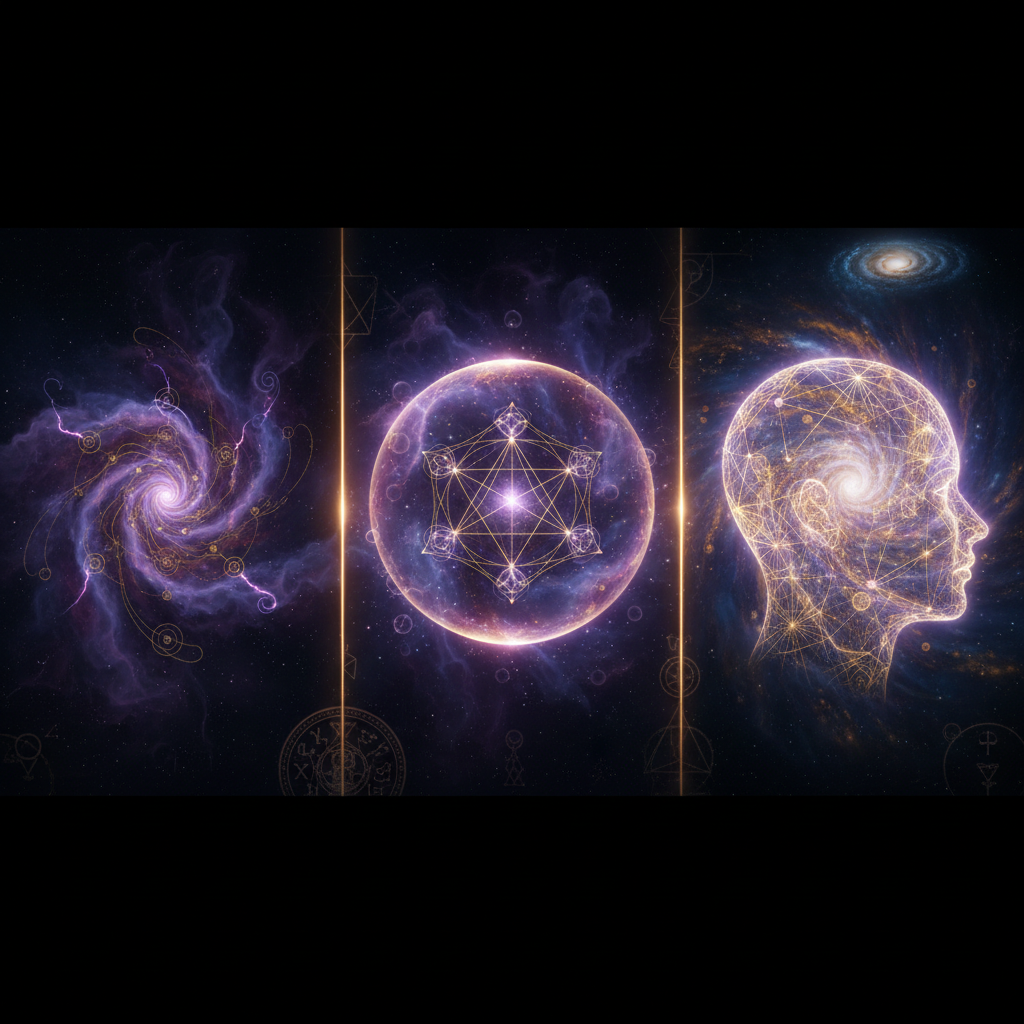
How an Egregore Forms
Across the surviving operative literature (Eliphas Lévi, Israel Regardie, Gareth Knight, Mark Stavish, Phil Hine), the requirements for egregore formation are remarkably consistent:
1. A clear conception. A name, a form, a stated purpose. Vagueness produces nothing.
2. Sustained focused attention. Daily, ritualised, with emotional investment. The Golden Dawn required new members to perform daily devotional work for years.
3. Group reinforcement. Multiple minds repeatedly turning to the same conception accelerate the process by orders of magnitude. Solitary tulpas can take years; group egregores can stabilise in months.
4. Symbolic anchoring. Sigils, symbols, statues, music or repeated phrases serve as points of return and condensation.
5. Periodic recharging. Without ongoing attention, an egregore weakens. Without any attention at all, it dissolves — though some traditions claim a sufficiently fed egregore can become quasi-autonomous and seek new attention from its own initiative.
Mark Stavish's *Egregores: The Occult Entities That Watch Over Human Destiny* (2018) is the most rigorous modern overview, drawing on French Martinist, Theosophical, and Roman Catholic sources to show that the same operative pattern appears across radically different religious frameworks.
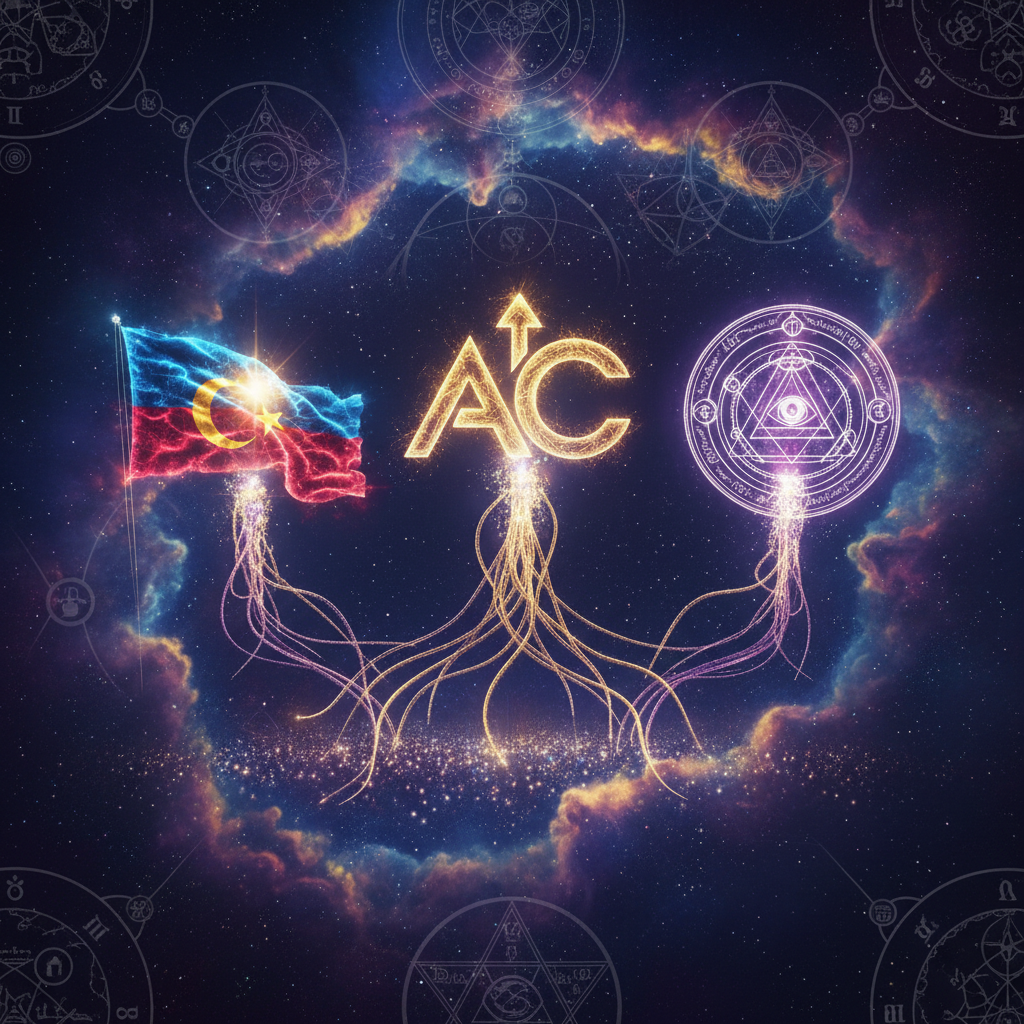
Mundane Egregores
The interesting move — made by Stavish, by Carl Jung in a different vocabulary, and by media theorists like Erik Davis — is to recognise that non-occult institutions generate egregores too, whether or not their participants believe in them.
A national flag is not just cloth. A corporate logo is not just an image. A religious icon, a monetary symbol, a pop-cultural figure, a brand: each is a focal point onto which millions of human minds project belief, hope, fear and identification. The aggregated psychic charge produces something that behaves as if it had agency — it shapes the behaviour of its devotees, defends itself against threats, recruits new participants, and survives the death of any individual member.
From this angle, a great deal of modern political, commercial and religious life can be read as the management of competing egregores. The marketer who fine-tunes a brand identity, the political strategist who crafts a flag-and-anthem moment, the cult leader who insists on uniformity of dress and gesture — all are performing operations the medieval magicians described in technical detail seven hundred years ago.
The occult literature simply asks: if these entities are real enough to act upon you, why would you prefer to be unconscious of them?
Practical Discernment
Whether one treats egregores as literal non-physical beings or as emergent psychological-social phenomena with apparent autonomy, the operative advice from the surviving traditions is identical:
Inventory your participations. Which images, brands, ideologies, fictions or identities receive your daily attention? You are feeding them. They are shaping you.
Notice the asymmetry. A healthy relationship with an egregore is one in which you receive at least as much as you give. Many modern egregores — algorithmic feeds, parasocial fandoms, partisan identities — extract enormous attention while returning anxiety, addiction, and identity-fragility.
Practise withdrawal. Periods of disengagement (digital fasts, retreat, silence) reveal which egregores have been quietly running you. The withdrawal is uncomfortable in proportion to the egregore's grip.
Choose conscious participation. Traditions across cultures recommend cultivating relationships with chosen egregores — patron saints, lineage figures, dharma protectors, ancestral spirits, creative muses — that genuinely strengthen rather than deplete the practitioner. The criterion is empirical: does the relationship leave you more capable, more present, more free? Or less?
This is not superstition. It is hygiene of attention — and attention is the substance from which everything else in your inner life is built.